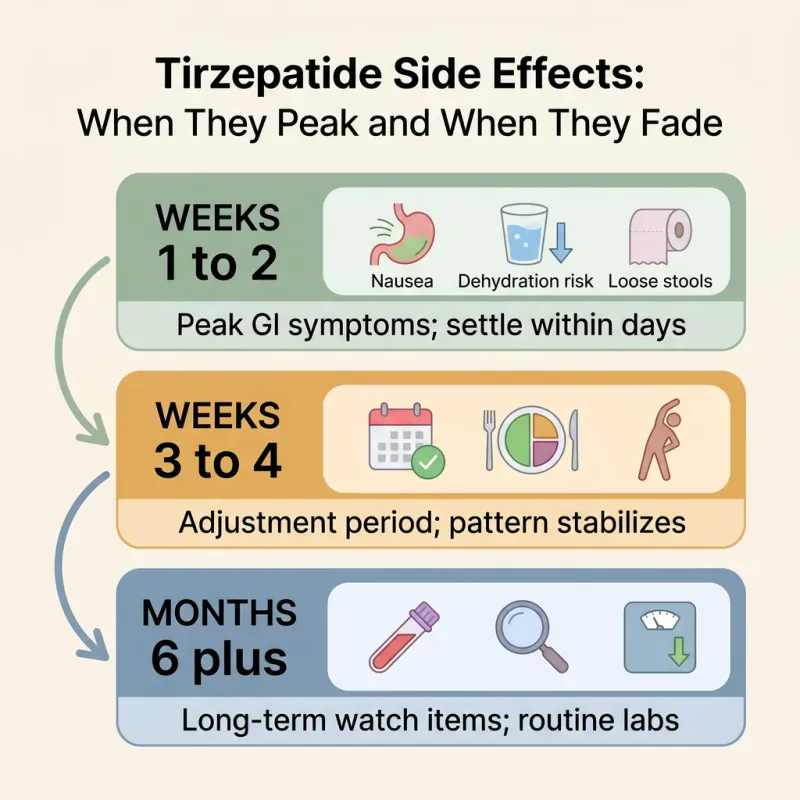
most common side effects of tirzepatide Tirzepatide: Complete Safety Guide Comparative safety and side effects
Description
While many patients achieve significant weight loss, the medication isnt equally effective for everyone

Findings: RCTSTEP UP Trial - Semaglutide 7.2 mg once weekly vs Semaglutide 2.4 mg once weekly in Obese Adults, Lancet Diabetes Endocrinol (2025) [PubMed abstract] Design: Randomized, double-blind, placebo-controlled and active-controlled trial (N=1407 | length = 72 weeks) in adults with BMI 30 without diabetes Treatment: Semaglutide 7.2 mg once weekly vs Semaglutide 2.4 mg once weekly vs Placebo Primary outcome: Percentage change in body weight and the proportion of participants with a body weight reduction of 5% or greater Results: Primary outcome (% decrease in body weight): Semaglutide 7.2 mg - 18.7%, Semaglutide 2.4 mg - 15.6%, Placebo - 3.9% (p 5kg within 90 days) History of chronic pancreatitis Acute pancreatitis within 180 days Baseline characteristics Average age 48 years Female sex - 79% Average weight - 233 lbs (106 kg) Average BMI - 37.6 Randomized treatment groups Group 1 (205 patients): Oral Semaglutide with a target dose of 25 mg once daily Group 2 (102 patients): Placebo Semaglutide was started at 3 mg daily and increased every 4 weeks to 7 mg, 14 mg, and 25 mg All patients also received diet (500 kcal deficit) and exercise (150 min/week) counseling Coprimary endpoints were the percentage change in body weight from baseline to week 64 and achievement of a reduction in body weight of 5% or more from baseline to week 64 Primary outcome: Results Oral semaglutide at a dose of 25 mg once daily resulted in a greater mean reduction in body weight than placebo in participants with overweight or obesity
Reversion from prediabetes to normoglycaemia and risk of cardiovascular disease and mortality: the Whitehall II cohort study
:max_bytes(150000):strip_icc()/VWH-GettyImages-2126120259-c2442d334436484baa255439265b7fb1.jpg)
Additionally, individuals with clotting disorders or those taking anticoagulant medications may find themselves more prone to experiencing bloody snot
Epidemiology 33 , 563571 (2022)